 такое кино
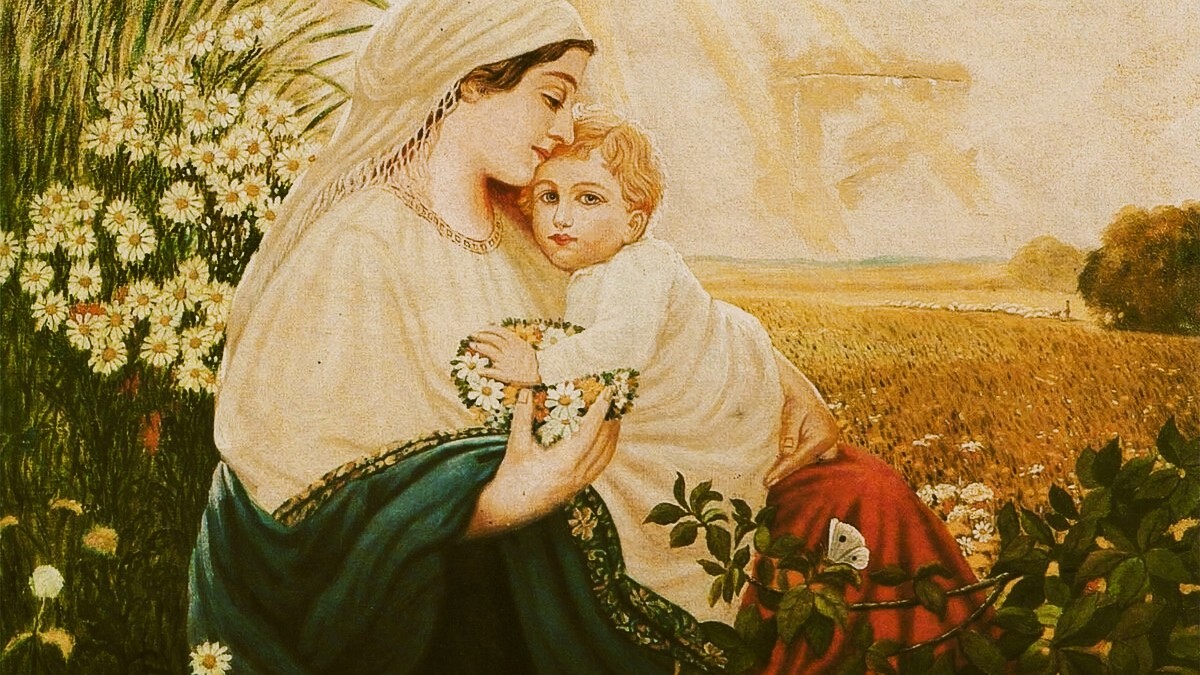
The Mother
From the cycle “The Limbo Zone”, Story Six
She knew of smoke before she knew of God.
Her mother used to say: “Our lineage is of the earth. Not of the sky, Helchen, not of the sky. Of the earth, of the roots, of that which grows downward, not upward.” And she would show her hands — wide, yellow, with soil always under the nails — and she would repeat, again and again: “Look. This is our Bible. Everything you need to know is right here.”
They lived near Glogau, in a village that appeared on no map — not because it was hidden, but because it had existed before maps were ever made. A house on the edge of a cliff, above the Oder, with a garden that bloomed three hundred days a year — not because of the climate, but because Grandmother Henrietta knew how. She knew in the way things were known before her, and before her, and before her — back to that morning when the first woman of their line stepped onto the bank and told the river: “Flow.” And the river flowed.
Henrietta would plant an apple tree, and it would bear fruit in its second year. For the neighbors, it took five. She would set a pot of milk outside the door, and it would not sour for a week. She spoke to things — not loudly, not in a whisper, but in the way one speaks to those who hear without ears — and the things answered: the fire burned brighter, the water was clearer, the dough rose higher.
The village knew this. The village accepted this. The village remained silent.
And then, the others came.
In 1935, two men arrived. In uniform. Not in black, not yet in black — in gray, with emblems Helga did not yet recognize. They asked for her grandmother. They spoke of “research.” They spoke of “heritage.” They spoke of the “Old Germanic spirit.” Grandmother sat in the kitchen, kneading dough, listening without answering, while one of them — young, with thin hands and thick glasses — wrote in a notebook: “The subject demonstrates a silent resistance characteristic of S-type individuals. Verbal contact is minimal. Recommend a follow-up visit after expanding the methodology.”
S-type. Hexe. Witch.
Grandmother did not know the German words. But she heard — not with her ears, no—but inside, in that place in the belly where things go that do not need to be known by the head. She heard what the young man wanted to take. That to him, she was not a woman, not a neighbor, not a mother, but a specimen. A sample. A number in a collection.
She stood up. Walked to the window. Turned around.
“Go,” she said. “And do not return.”
The young man looked at her — and turned pale. He grew pale in the way people do when they see what they are not supposed to see. He stood. Left. He did not say goodbye.
The next day, Grandmother fell in the garden.
She didn’t die — she fell. She simply folded, like a chair folds if a leg is knocked out from under it —and she lay among the apple trees, her face white, her hands cold. Mother ran through the garden, and Helga — nine years old, barefoot, in a mother’s altered dress — ran after her. The sun was warm, the apple trees were in bloom, and a scent — thick, sweetish, cloying — the smell of meat, singed wool, and tar — hung in the garden, and no one knew where it came from.
Grandmother opened her eyes. She looked at Mother. She said:
“They have found it.”
Then, more quietly:
“I gave it away… so that you would be free. And you — you will give it to her.”
She looked at Helga.
“And she—to her own.”
And she closed her eyes.
And she did not open them again.
The scent vanished — instantly, as the smell of gas would vanish if you turned off the burner — and only the apple tree remained: blooming, white, beautiful.
Helga stood there, not understanding.
Mother took her hand.
“Remember,” she said. “When they come — do not show them. If you show them, you will work for them. If you don’t, you will work for yourself.”
“And for your own.”
…
Helga grew up. She married Fritz, a future Untersturmführer, a man of order, a man of lists, a man who believed the world was a column and life was a digit.
She loved him. In her own way. Not the way they love in novels — with butterflies, fainting spells, and roses. But the way earth-women love — with soil, with roots, with that which grows downward: silently, reliably, inevitably.
She accepted his world. The Party meetings. The uniform. The salutes. The Führer’s speeches on the radio. She nodded when necessary, remained silent when necessary, smiled when necessary. Not because she believed. But because order was what she had always seen: Grandmother’s order in the garden, Mother’s order in the kitchen, Fritz’s order in the lists.
It was all the same.
The SS came to them twice. In ’36 and in ’38. Not in black — in gray suits, with briefcases, with polite smiles and questions that seemed innocent only to those who didn’t remember the whispers in the villages. Hexen-Sonderauftrag. Unit “H.” Himmler believed that witches were not heretics, but keepers of the ancient Germanic spirit; that the fires of the Inquisition were a Roman conspiracy against pure blood, and that within old recipes, lullabies, and the patterns on spinning wheels slept a power capable of reshaping the world.
Helga answered steadily. With the composure of those who know: order is not an ideology. Order is a hierarchy. And in this hierarchy, blood stands higher than flags, and silence stands higher than orders.
One of them wrote: “The subject demonstrates a characteristic silent resistance. Not a threat. Recommendation: observation.”
They left.
And then came Klaus.
And then came Dieter.
And the order became something else entirely.
…
She packed the suitcases at night.
Not because she feared the light, but because during the day it was impossible. During the day, there was order. During the day, there were neighbors, Frau Krüger behind the door, the neighbor’s child crying behind the wall. During the day, there was a world where a woman packs suitcases because she is visiting relatives. At night, it was different.
At night she saw, she knew — not from the radio, not from the neighbors, not from the newspapers. She knew — the way Grandmother had known: inside, in that place where things go that do not need to be known by the head. She knew the war would not end. That the Russians would come. That the bombs would fall. That the city would collapse.
And she knew what she could do.
She stood in the nursery. Klaus was asleep — on his side, knees tucked in, fist to his mouth. Dieter — on his back, sprawled out, a teddy bear on his chest. Both were breathing. Both were alive. Both were almost transparent.
Not in the sense that you could see through them. But in what she saw. She saw them not as bodies, but as empty forms, waiting to be filled. Like clay before the firing. Clean. Empty. Ready. Every child is a vessel into which the world is poured, and what they become depends on what is poured inside.
She had always seen this. Since childhood. Since the day Grandmother fell in the garden. She hadn’t spoken of it. She hadn’t shown it. She hid it — as one hides a knife from a child: not because the knife is evil, but because the child doesn’t know how to use it.
But now, she knew.
She sat on the floor between the beds. She folded her hands on her knees. Closed her eyes.
And she did it.
Not because she knew how. Not because she had been taught. But because it was within her. Like the tree within the seed. Like the marrow within the bone. Like the milk within the mother. She simply did it. She opened that place where things go that do not need to be known by the head. And she poured.
Not light. Not protection. Not a prayer. Not that which gives, but that which takes. Darkness. Her own darkness — the darkness she had accumulated for thirty years: the darkness of silence, the darkness of compliance, the darkness of obedience, the darkness of a woman who nodded when necessary, stayed silent when necessary, and smiled when necessary. She poured this darkness into the vessels of her children.
And the vessels were filled.
Not with evil. Not with a curse. But with invisibility. With that very silent resistance that the young man had recorded in his notebook. She filled her children with this resistance — not so they would fight, but so they would vanish. From the lists. From the maps. From the world that was burning.
And the price was herself.
She felt herself slipping away. Not her body — the body remained. Not her mind — the mind still worked. But something else. The part that saw the transparent vessels. The part that heard things. The part that was the connection — between her and the world, between her and her children, between her and what she called “life.”
She gave it all away.
Klaus wrapped himself in his blanket. Dieter pressed the teddy bear to his face. Both continued to sleep.
Helga stood up. Left the room. Closed the door.
And she smelled it.
Sweetish. Cloying. The smell of scorched wool. The smell of meat. The smell of tar.
The very same scent that had hung in Grandmother’s garden when she fell.
She opened the window. The night — quiet, Berlin night, with the smell of wet asphalt. No smoke. No fire. Only the city, sleeping under red-and-white flags, and the stars, and the silence.
But the smell did not leave.
It was inside.
…
The train to Hanover took fourteen hours.
A third-class carriage, wooden benches, the smell of wet wool and children’s hair. There were many people — more than there were seats: they stood in the aisles, sat on suitcases, lay under the benches. Everyone was heading west. Everyone was fleeing something. Everyone — somewhere.
Helga sat by the window. Klaus was beside her, by the wall, silent. Dieter was on her lap, asleep, his teddy bear pressed to his face. Two suitcases under the bench. One with children’s things. The second with documents and winter clothes.
She looked out the window.
Outside — a village. A small, Silesian village, with wattle-and-daub houses, vegetable gardens, a woman at the well. A world that does not know. A world where a woman fetches water, cows graze in the meadow, the river flows, the sky is blue, and nothing happens.
And the smoke.
A thin, transparent, barely noticeable wisp above the village. Not from a chimney — from nowhere. It just hung in the air, the way a scent hangs over a river: unnoticeable until you begin to sense it, and once you do — impossible to stop.
Helga blinked.
The smoke was gone.
The village — clean, blue, sunny. The woman at the well raised her bucket. The cows chewed. The river shined.
But the smell remained.
She forced the window open — with an effort, creaking, stiff — and let the air in. It smelled of grass. It smelled of hay. It smelled of autumn.
But the scent did not leave.
It was inside.
In her lungs. In her throat. In that place where words come from and where things go that do not need to be known by the head.
She closed the window.
Klaus looked at her.
“Mama? What are you smelling?”
“Nothing, my sweet.”
“Your nose is red.”
“It’s just cold.”
She smiled. The smile was right, warm—the smile of a mother warming her child. But behind the smile — in that place where children do not look — there was something else. There was smoke. Thick. Sweetish. Cloying. Smoke that came from nowhere — but from within.
And she understood what it meant.
She knew it the way Grandmother had known when she fell in the garden.
It wasn’t smoke from the village. It was smoke from her future. It hadn’t started burning yet. Nothing had happened yet. There were only four weeks of war, and Fritz wrote from Lviv that “everything is under control,” and the radio said the “Reich stands unshakable,” and the neighbor Frau Krüger was frying cutlets in the next apartment, and it smelled of oil and bread, and nothing — nothing — indicated what was to come.
But she felt it.
Not facts. Not figures. Not reports. But the scent. The scent that hangs over a place that will be burned, long before it is set ablaze. Like the smell of char hangs over a forest where nothing is burning yet, but the roots are already smoldering.
The train went through Magdeburg. Through Hanover. Through Aachen. Across the border — the one that hadn’t been redrawn yet, that stood on the map like a ruler on a table: straight, clear, absurd.
Across the border — Belgium. Meadows. Cows. Churches. Stone walls, green roofs, canals reflecting the sky. An idyll. A pure, watercolor, shameless idyll of a world where war is somewhere far away, across the border, across the ruler, across the red line.
Helga looked out the window.
And she saw the smoke.
Above the meadows — smoke. Above the churches — smoke. Above the canals reflecting the sky — smoke. Not thick. Not black. Thin. Transparent. The kind you see only if you know it’s there. And she knew.
And she heard it.
She didn’t just hear it — she was hearing it. Constantly. Like a background. Like the ticking of a clock you stop noticing until the clock stops.
Voices. Children’s voices. Thin. High. Singing.
Not from the compartment — from somewhere else. From the air. From the smoke. From that place she had opened at night, sitting between the beds, when she poured her darkness into the vessels of her children.
The voices sang:
Wake up, come free,
And look around…
Helga recoiled. Her hand was on Dieter’s head. Her palm was warm, alive—the mother warming her child.
But beyond her palm were the voices.
Children’s voices.
Dead voices.
She knew they were dead — not because she saw them, but because they had no scent. Living children smell — of soap, milk, sweat, grass, cookies. These had no scent. Like vessels that had been rinsed and put on a shelf: clean, empty, ready.
They sang and danced — outside the window, in the meadow, among the cows that didn’t see them. In clothes Helga couldn’t identify: not German, not Belgian, not Polish — just clothes worn by children who were no more.
They spun in a dance— outside the train window, at sixty kilometers an hour — and they didn’t fall behind. They held hands. They jumped. They laughed — silently, with mouths that opened and closed like the valves of shells.
And they sang:
Here is the Devil, standing in my way,
Within his eyes, my own pain I descry…
Helga turned away from the window.
Klaus was reading a book — small, paperback, with pictures. Dieter was looking out the window. In the compartment — a woman with a basket, an old man with a cane, a young couple in the corner. All alive. All with scents. All in their own vessels.
But beyond the glass — the dead were dancing.
Helga knew — she had given her darkness to her children. And the darkness had filled their vessels. And the children became invisible — to the world, to the war, to the bombs, to the lists, to everything that burns.
But the darkness had not vanished. It had flowed. From her into them. And in its place, a hole remained. Black. Deep. And through that hole — into her lungs, into her throat, into that place where words come from — the smoke flew in.
The smoke of crematoria not yet built.
The smoke of children not yet born, but already dead.
The smoke of another future, which she felt — not because she saw it, but because she had given away her darkness and become empty. And emptiness attracts. As a vacuum attracts air. As a hole attracts water.
She had become a vessel in reverse — not a container, but a source of leakage. And through that leak, everything the world was not supposed to know poured into her: scents, voices, visions, smoke.
And she couldn’t close the window.
Because the window — was her.
…
The border was left behind — not as a line on a map, but as a change in the pressure in her ears.
Liège met her with rain.
A fine, Belgian rain, the kind that doesn’t fall from the sky but comes from the very fabric of the air — damp, heavy, saturated with coal, iron, and river clay. The station was large, stone, with clocks that showed the correct time. And that was the first thing that surprised her: clocks that moved. In Berlin, the clocks had long since stopped — not because they were broken, but because time had ceased to be a measure, turning into jelly, into glue, into a substance that stuck seconds together into one indistinguishable lump.
Erna was waiting at the exit.
Tall, thin, with a face that used to be beautiful but had now become correct: a correct nose, a correct mouth, the correct smile of a woman who takes people in because she promised she would. She hugged Helga. Patted Klaus on the head. Picked up Dieter — and Dieter, usually wary of strangers, laughed. That laugh — thin, ringing, wet with rain—sounded in the damp silence of the station like a note struck in an empty church.
“Welcome,” Erna said. “The house is far. Let’s walk. We have no petrol. We have very little of anything. But we have room for all of you.”
The house stood on the outskirts, in a district called Amercœur — and Helga didn’t know why, and she didn’t ask. That was the first thing she didn’t do: she didn’t ask. Before — she asked about everything. She asked Fritz about politics, the shopkeeper about the price, the doctor about vaccinations. Now — she was silent. Silence had become her skin — dense, warm, covering.
The house was stone, two stories, with a narrow garden and a privet fence. Günther — Erna’s husband, a Belgian, an engineer, quiet, with a mustache and the hands of a mechanic — carried the suitcases in. He didn’t ask what was inside. He didn’t ask why she had come. He didn’t ask. Anything. He simply carried them in, set them in the hallway, and said: “Tea will be ready in ten minutes,” and went to the kitchen.
Silence was their common language. Everyone was silent. Erna was silent about the war. Günther was silent about politics. The children were silent about what they had seen. And Helga was silent about the smoke.
The children settled in.
Klaus — silently, as always: opened his book, sat by the window, and read. A boy who didn’t cry during the bombings. A boy whose eyes were open and empty — like those of someone pulled from the water after they’ve already swallowed their fill, but are still breathing.
Dieter — fell asleep on the very first night, the way five-year-olds do: instantly, without transition, like a light being switched off. With his teddy bear. On his side. With a fist to his mouth.
And Helga sat on a chair by their bed and watched.
And she saw.
She saw their vessels—no longer empty now. Filled. With the darkness she had poured out that night, sitting between the beds on Schillerstraße. The vessels were dark—not black, but dark, like the sea is dark at dawn: not yet black, but no longer blue. And inside—something sloshed: not water, not blood, but silence. A thick, viscous silence that she had given them—the silence of compliance, the silence of obedience, the silence of a woman who was silent when she should have screamed.
And she understood — finally, completely, with her whole body, her every bone — what she had done.
She had protected her children from the world by making them silent. By giving them her silence. Her darkness. Her submissiveness.
And they would be silent — for the rest of their lives. Silent when the bombs fell. Silent when the killings happened. Silent when the burnings began. Silent — as she had been silent. As Mother had been silent. As Grandmother had been silent — until the day she fell in the garden and said: “They have found it.”
Legacy.
Not a gift — a legacy. That which is passed from generation to generation, from mother to daughter, from daughter to her children. Like the color of eyes is passed down. Like the shape of hands. Like silence.
The days passed.
The children played in the garden. Erna cooked. Günther fixed the pump. The rain fell every day — quiet, stubborn, Belgian rain, the kind that doesn’t end but simply becomes part of the air.
And Helga saw.
She saw more than before. Not just the smoke. Not just the voices. She saw people. Polite. Quiet. Calm. Those who were not there.
They walked down the street — beside the living, not touching, not brushing against them. A woman with a basket — beside a woman with a basket. An old man by the shop — beside an old man by the shop. Children in the square — beside children in the square.
Some had a scent. Others did not.
Some took in the sun. Others let it pass through them.
And Helga walked among them — and she could not tell which was which. Because the border between the living and the dead was indistinguishable. Because that hole she had opened in herself when she gave her darkness to her children was widening. And through it, more and more passed: scents, voices, faces, smoke.
Sometimes she washed the dishes. The water was warm. The soap smelled of lavender. But in the sink, in the soap suds, it wasn’t her hands that were reflected. Small palms, covered in ash, were reflected there. She didn’t wipe her eyes. She simply turned off the tap. Dried her hands on a towel. Went into the room. Sat by the window. Watched the boys kick a ball across the wet grass.
She did not cry.
Tears are the luxury of those who believe the world can be fixed. She knew: the world is not fixed. It is bypassed. Or one hides within it.
…
One evening — after dinner, after the story, after Dieter had fallen asleep with his teddy bear and Klaus was reading with a flashlight under the covers — Helga went out into the garden.
The night was warm, October, with the smell of pears and wet earth. There were many stars — you don’t see them like that in Berlin, where the sky is washed out by the city. Here — the sky was clean, black, deep, and the stars in it were like holes burned into the ceiling of a room, beyond which lay something else.
She sat on a bench under the pear tree. Folded her hands on her knees — as she had folded them that night, sitting between the beds.
And she asked.
Not loudly. Not in a whisper. Inside — in that place where things go that do not need to be known by the head.
“Why?”
And she received an answer.
Not in words. In an image.
She saw herself. Herself on Schillerstraße, in September of ’37, when two men came — not for her, but for the neighbor, Frau Lehmann, who lived on the floor below and who knew the old songs and how to brew herbs. Helga knew that Frau Lehmann was also “one of those,” also of the earth, of the roots. And when Frau Lehmann was taken away — quietly, neighborly, without a fuss, the way they take those who aren’t meant to be noticed — Helga stood behind her door and remained silent.
She remained silent.
She didn’t open the door. She didn’t scream. She didn’t run out onto the landing. She didn’t say: “Leave her alone.” She did nothing.
She was simply silent.
As Grandmother had been silent when they came for her. As Mother had been silent when Grandmother fell in the garden. As the lineage remains silent — from generation to generation, mother to daughter, daughter to her children.
And here she sat on a bench in Liège, in a Belgian garden, under a pear tree that was not in bloom because it was October. And there was smoke in her lungs, and her eyes saw the dead, and her children slept in the house, full of her darkness, her silence, her small, daily, neighborly betrayal.
She had protected her own.
But not her neighbor.
She had protected her children — from the bombs. From the war. From the lists.
But she had not protected them from herself.
Because that darkness she had given them was her silence. Her compliance. Her small “yes” — every day, every hour, every minute when she could have said “no” — and didn’t.
And now the children are silent.
Silent — as she had been silent.
And they will be silent all their lives.
Their children will be silent.
And their children too.
And so it will go until the end of the line, until the last woman who sits on a bench under a pear tree and looks at her clean hands and asks inside: “Why?”
And receives an answer.
And the answer will be smoke. And ash.
…
In October, a letter arrived.
Not from Berlin. Not from Lviv. From nowhere — an envelope without a stamp, without a postmark, without a return address, left on the doorstep like a stone: quietly, unnoticeably, at night.
Erna found it in the morning. Brought it in. Laid it on the kitchen table.
“For you. It was on the doorstep,” she said. “The envelope says ‘Frau Lang’.”
Helga took it. The envelope was thin, gray, bureaucratic. Inside was a single sheet. Typed, small, neat, without corrections.
“Frau Lang.
We know who you are.
We know what you have done.
We know that your children are invisible.
H- Sonderauftrag has kept records since 1935. Your grandmother, Henrietta, was on the list under number S-117. Your mother, Martha, under number S-214. You are S-341. Your children are not yet registered, but they will be once they emerge from the ‘silent vessel’ phase.
We do not need your loyalty. We do not need your faith. We need your silence — the very silence you gave to your children.
When you are ready—we will find you.
With respect, Department of Documentation and Study of Traditional Folk Beliefs of the German People.”
In the margins — handwritten in red ink, in the small, neat script of a person accustomed to forms and columns — was written:
“S-341. Status: active. Location: unidentified. Recommendation: observation. Threat: minimal. Potential: high. Note: Subject utilized the ‘Silent Vessel’ protocol — coercion is categorically not recommended. Biological carriers K-1 and D-2 — priority vector for resource recultivation. Direct extraction of S-341 is impractical due to matrix degradation.”
Act through the children…
Helga read it and did not flinch. She did not turn pale. She did not scream. She folded the letter — neatly, in half, then again, and again — until it was the size of a small square, and she put it in her apron pocket.
And she continued preparing breakfast.
She sliced the bread. Poured the milk. Set the kettle. The children slept. Erna washed the floor. Günther fixed the pump. Everything was as it always was. As it always was in the world she lived in: quiet, neat, on schedule.
And the smoke, as always.
In her lungs. In her throat. In that place where words come from, the words she does not say.
She knew the letter was true. She knew — the way Grandmother had known when she said: “They have found it.” She knew — inside, in the roots, in the bone, in that which grows downward.
Himmler knew. His people knew. They searched for witches — not to burn them, but to use them. As one uses a river for a power station. As one uses the wind for a mill. As one uses the soil for a harvest.
The old power — it is neither evil nor good. It is a resource. And they wanted to exploit it.
But she had outpaced them.
She had given her darkness to her children. Given her silence. Given everything that could be taken — and remained empty. And you cannot exploit emptiness. You cannot write emptiness into a list. Emptiness is not a zero, but a minus. Not an absence, but a loss. Not peace, but smoke.
That evening, when the children were asleep, when Erna and Günther had closed their bedroom door, when the house grew silent — Helga took the letter from her pocket. Unfolded it. Read it once more.
“Act through the children.”
She sat on the floor — where she had sat that night, between the beds on Schillerstraße — and she held the sheet in her hands. The paper was light, the words were typewritten, and there was no signature.
She folded the letter. Put it in her pocket. Stood up. Walked to the window.
Outside was the garden. The pear tree. The bench. The stars.
And the children.
Small, they stood in the garden, holding hands in a circle, and sang. Silently. With their mouths. But she heard them. She heard them — inside, in that place where the connection with the earth used to be, but was now a hole.
And they sang:
…You are me, I am you.
Helga opened the window. She let in the air — already warm, April air, but with that same smell of pears and wet earth.
But the smell of smoke did not leave.
Because the smoke — was her.
She closed her eyes. She stood there. She stood for a long time — until the stars shifted, until the pear tree stirred in the darkness, until the children in the garden fell silent.
And then — quietly, in a whisper, with lips that no longer belonged to her, but belonged to the smoke, to the silence, to the darkness she had given to her children — she said:
“Find us.”
As she had once written to Fritz.
She knew — inside, in the roots, in the bone, in that which grows downward — that Fritz would not find her. Not because she was far away. Not because of the war. Not because there was no address.
But because she had gone — beyond the veil of smoke. Into that place where light does not reach. Into that reality she had created — from silence, from darkness, from her own soil — for her children.
Helga closed the window. Turned. Walked to the door of the nursery. Opened it. Peered in.
Klaus was asleep — on his side, knees tucked in. Dieter — on his back, the teddy bear on his chest.
Both were breathing.
She stood in the doorway and looked at them — and saw their vessels: dark, full, of her darkness, her silence, her small, daily betrayal of the world beyond their room.
She smiled. Not with her lips. With something deeper. With that which remained after everything else had burned away. She walked toward them. Across the floor, stepped on by bare feet that were not there. Through the air that smelled of singed wool. Through a world that continued to live, not knowing that somewhere there was a woman who had paid for two children’s hearts with her soul.
And she did not regret it.
Because a soul is not something you save. It is something you give away. So that others may remain. So that the smoke is only in your lungs. So that the world, whatever it may be, continues to spin, not knowing that at its center stands a woman who no longer breathes air.
She breathes ash. And that is enough.