 такое кино
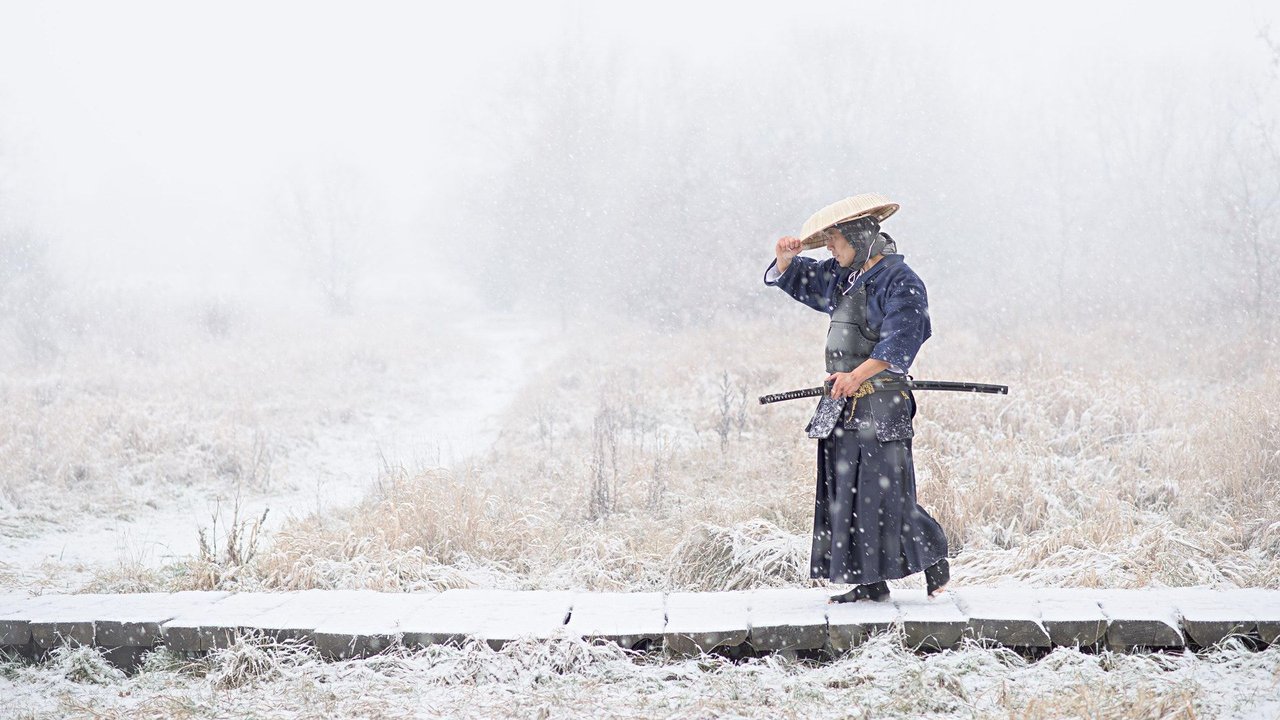
The Battle of Bun’ei
Rarely does modern prose offer such a striking blend of satire, psychological depth, and poetic lyricism as found in the novella “The Battle of Bun’ei.”
This work is not merely a comedy of manners or a grotesque sketch of provincial Japan; it is a profound reflection on human nature, loneliness, and the search for oneself. Yuri Melnikov masterfully constructs the narrative, beginning with a contemplative, almost meditative prologue in which a northern Japanese village appears as a world frozen in time and snow. From the very first pages, the reader is immersed in an atmosphere of melancholy, irony, and hidden beauty, where a complex stratum of emotions and meanings lies beneath an exterior of simplicity.
Yet, the plot unfolds as a farcical chronicle: a mayor bogged down in bureaucratic schemes is forced to organize a “real” festival for the arrival of wealthy tourists. Fake samurai armor, collective drinking, and desperate attempts to pass off provincial routine as authentic tradition all come into play. With brilliant humor and sharp observation, the author satirizes bureaucracy, collective psychology, the absurdity of “globalization,” and the eternal human craving for celebration—even if it descends into a mass dip in icy water.
However, a genuine drama emerges behind the satire and grotesque. The characters are not mere caricatures, but living people with their own fears, dreams, fatigue, and hopes. The mayor’s internal monologues are particularly well-drawn, where fatigue, loneliness, and a longing for something real pierce through the irony and irritation. The female characters—from the ironic, mysterious Ayumi to the temperamental Mina—add depth and layers to the story.
The novella’s finale unexpectedly expands the genre boundaries: the village story reveals itself as part of a major scam, and the “secretary” turns out to be an international professional con artist whose story will continue in the novella “Code(a).” This twist not only adds dynamism but also recontextualizes the entire narrative, turning it into a parable about how easy it is to deceive and be deceived when one believes too strongly in illusions.
The epilogue—poetic, almost mythological—concludes the novella on a high note. It transforms the protagonist into a symbol of the eternal search, loneliness, and longing for home, lending the entire story philosophical depth and a lingering emotional resonance.
“The Battle of Bun’ei” is not simply a funny and biting satire on Japanese rural life and bureaucracy. It is a multilayered, subtle, and truly literary work, in which genuine humanity hides behind the laughter and absurdity, and the sadness and beauty of life lie behind the irony. Yuri Melnikov has succeeded in creating a work of rare power and style that not only entertains but also compels the reader to reflect on eternal questions—of home, alienation, memory, and the price of freedom.
Recommended for anyone who appreciates smart prose capable of combining laughter with tears, and who seeks not just a plot in literature, but depth.