 такое кино
A Road of a Thousand Years. Part One. Chapter Three
The bus, crawling slowly along the dirty, rutted road, seemed to carry Mei Lin into another world.
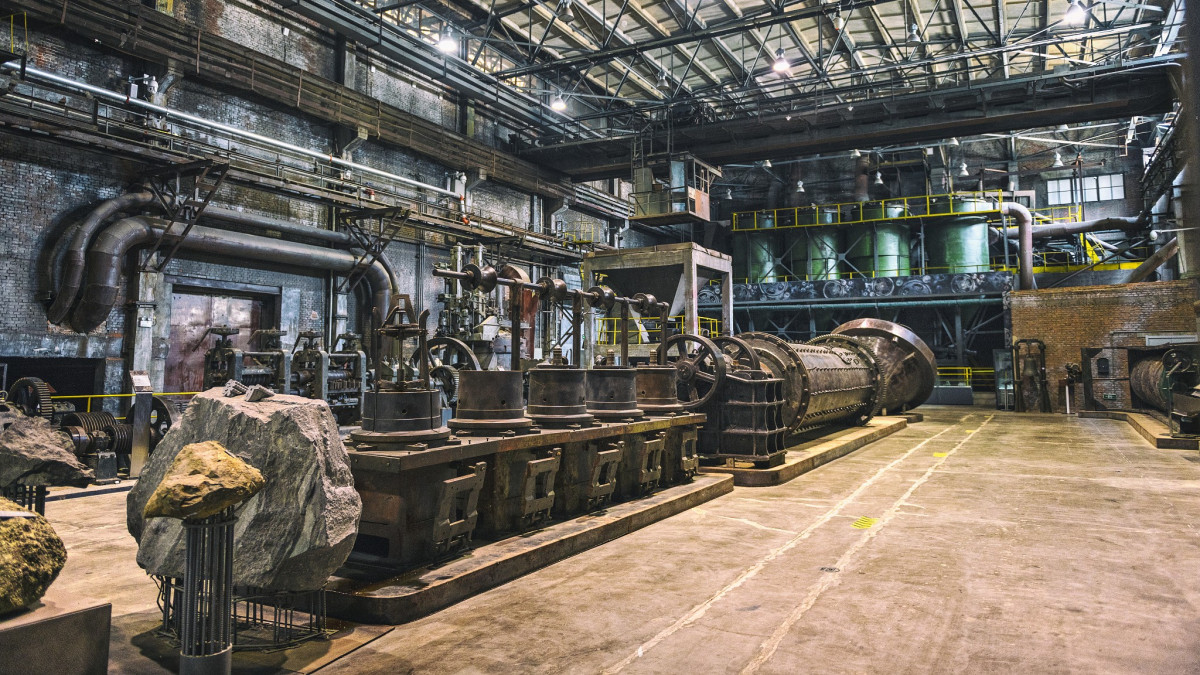
The Beijing Automobile Works, where production of trucks for the Chinese People’s Army was being established, exuded a spirit entirely different from that of the old school walls. Here it was noisy and dirty; the air trembled with the rumble of machinery, the metallic clang blended with sharp blows, and the acrid smell of machine oil and hot metal settled on everything. This was a world that knew no Russian poetry, a world marching inevitably toward its iron future. The road to the factory was wider than the city streets, but just as uneven, covered in potholes over which rare trucks and old buses bounced.
Mei Lin walked up the steps, inhaling this alien, industrial air. Her thin gray dress seemed out of place among the workers’ overalls and jackets thrown over shoulders. She was accustomed to the cleanliness and quiet of classrooms, but this factory was her second life, necessary as a second breath.
His office was located in a small but sturdy building constructed in the Soviet style, standing out for its massiveness against the background of Chinese structures. The office door was ajar. He sat at a large desk cluttered with papers and blueprints, his gaze riveted to some drawing of an engine. Sergei Morozov. Military attaché. A large, almost burly man of about thirty-five, with tightly compressed lips and a gaze accustomed to giving orders. He smelled of tobacco and something Mei often associated with another homeland — perhaps the scent of distant pine forests or simply air that was foreign to this coal-soot sky.
Morozov looked up from his papers when he heard a light rustle and saw her. Mei Lin stood in the doorway, her gray dress seemingly glowing in the dim light of the office.
Late. As always. These Chinese — their punctuality is like that of our loaders at the dock: if they show up, it’s already a holiday. And this one… if only once, like a human being, like a Soviet person, five minutes late, not half an hour. No, here everything is done in their own way. Well, at least not a week late. If only my Sasha were here — she’d show them what discipline means. Or maybe, on the contrary, she’d run away herself after a week. That damn school. I knew she’d come, just as the sun sets over the horizon — inevitably. These Chinese. Like yesterday’s dream — always something unspoken, translucent. I need a translator. And not just a translator. But her. Her accent, her knowledge. The Chinese chatter like sparrows, but this one… She knows how to listen. She knows how to be silent. And that is valued here. Go find another one like her — smart, from a good family (by local standards), and knows Russian perfectly.
“You’re late again, Comrade Mei,” he said, and irritation seeped through his voice, but without malice, because her lateness was habitual. He switched to Russian, the language that was native to him, and for her — the language of her childhood. “You know I need a translator all day. This Chinese… The devil knows how you speak it. Communicating with the locals using a phrasebook is like banging a hammer against a wall.”
Mei Lin lowered her head slightly, habitually accepting his displeasure.
“Forgive me, Sergei Petrovich. But I have lessons at school in the morning. I told you.”
School. What a whim. Found something to rejoice in. Some school. In this Beijing, where dirt gets under your fingernails, and every second person dreams of a bowl of rice out of hunger. As if she doesn’t understand her place is here, next to those who drive progress. However, let her amuse herself… My Alexandra. Sasha. In Sverdlovsk. She wouldn’t understand this. Work is work. Duty is duty. And this one… so fragile, like a porcelain figurine brought here from another time. And for some reason, she is here. In my office. Just like that.
“At school?” Morozov finally raised his eyes to her. His eyes, light and piercing, scrutinized her closely, as if seeing her for the first time. “What do you need that school for? Messing around with children? This is state business. You are needed here, not there.”
“I really like working with children,” Mei Lin answered quietly, and to her own surprise, a barely perceptible note of sincerity sounded in her voice. Morozov turned away, grunting.
My God. An idealist. Probably why she returned to this hole. He understood: in the Union, she would have lived much better. Warmth, rations, apartments. And here? This Beijing, this air soaked in soot and promises that will never come true. A city like an old wound that just won’t heal. All this post-war time, the Japanese, the Kuomintang, the civil war — like water that flows, flows, and leaves behind only silt and mud. And his Sasha is in Sverdlovsk. There is snow there. There is cold. There are children. Duty. Responsibility. Everything is clear. Everything is plain. And here… Here everything is unclear. Everything is alien. Except for her. She is like an island, strange, weightless, but so necessary here. Not that he loved her. No. Love is for others. It’s for the wife. It’s for the children. And this one… She was simply here. And she had to be here. That’s just how it turned out.
“Listen, Lin,” he said, turning to her, and now there was no irritation in his voice, only a strange, almost personal curiosity masking calculation. “Why didn’t you stay in the Union at all? Born there, raised there, got an education… Returned to this… ruin.”
Mei Lin looked at him with a long, sad gaze.
“My parents always wanted to return, Sergei Petrovich. They waited for this. When the Kuomintang left the mainland, they decided the time had come. Time to return to the Motherland. Their roots are here. Now they teach at Peking University. Perhaps I too will leave the school someday and teach there.”
She said this with a kind of detached hope, as if the university were not just a place for her, but a distant, unattainable haven. Morozov nodded, saying nothing. In his memory, the faces of workers surfaced — gray, tired, with eyes in which the fire had long since gone out. He himself had become the same. He hated this smell of fuel oil, but hid it — it didn’t befit an officer to complain. And everything that was once important remained there, beyond the Urals, in another life. Here he was only a military specialist, only a stranger, only a man who could not learn the language.
Mei Lin looked at him, and it seemed to her that he was not him, but a huge, gray stone brought here by an unknown current. And she — she had to be beside this stone.
The factory. Iron. Rust. Everything creaks, everything hums. This is not a school. There is no Pushkin, Blok, Pasternak here. His muses are not here. My muses are not here. There are only orders here. And him. Morozov. His smell — not the smell of a man, but the smell of a foreign land. USSR, the Urals. His family is there. His life. And me? My life — what is it? Books. Students. And this. This is the price. The price for the air I breathe. The price for being left alone, for now. He is my protector. My executioner. My ship, doomed to sail these murky waters. Parents. Motherland. All these words. They are like shards. Shards of a mirror in which I try to see myself but see only others’ reflections. I speak of children, I think of their purity. But am I — am I pure? Or am I too already covered in dust, like an old book? Or is it the dirty water flowing down the street washing something off me? No. It doesn’t wash away. It leaves a mark. A mark on my soul. I know. Father says: “Our duty is to build a new China, even if it breaks us.” But when I see his back bent over lectures, I want to scream.
And behind the wall, behind the clouded windows, the factory breathed and groaned like a huge beast that cared neither for Mei nor for Morozov: it had its own concerns, its own rhythms, its own endless, indifferent work.