 такое кино
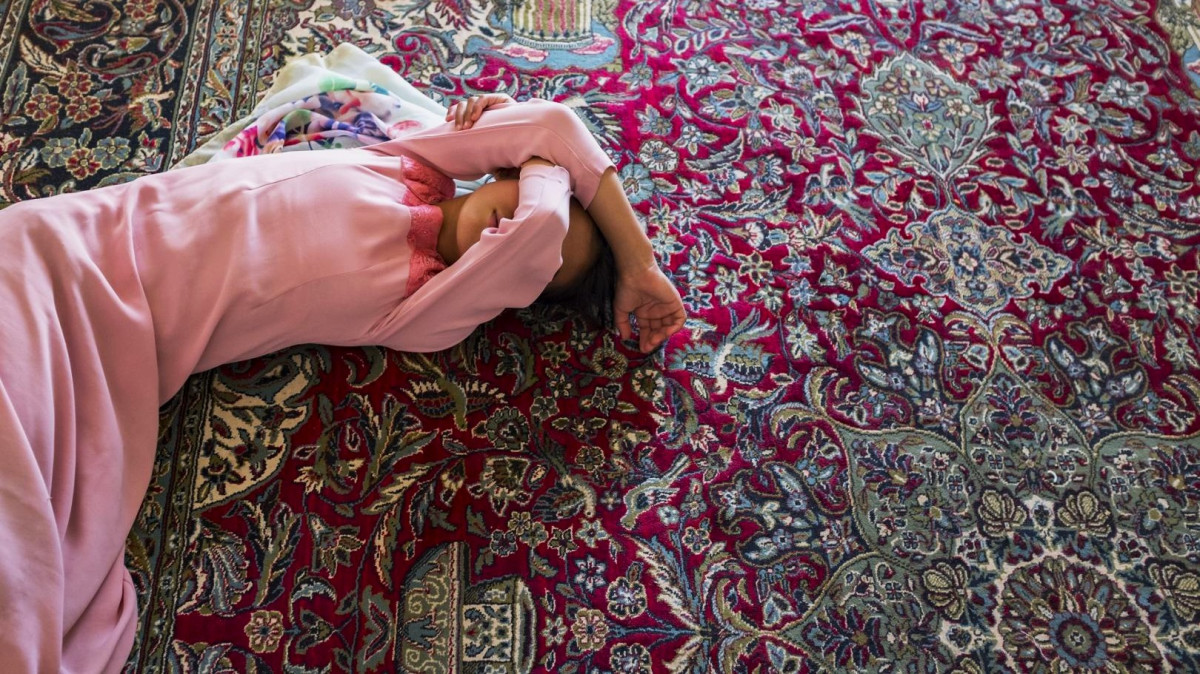
Fordow. Zeynab
23 Khordad 1404 (June 13, 2025) — 14 Tir 1404 (July 5, 2025)
…and the music was ending, ending, flowing slowly like thick pomegranate syrup from an overturned spoon, because the battery was dying, the little lithium soul of Dad’s old player was flying off to the heaven for electronic devices, and the boys with hair the color of cotton candy sang quieter and quieter, lower and lower, turning from ringing birds into tired, sleepy bumblebees. Jungkook, Jimin, Taehyung—they were leaving into the silence, into the great Nothing, the same place where Mom and Dad, and the network signal, and that world where you could buy ice cream at a kiosk, had gone.
And I lay there thinking: how strangely the world is arranged, you are woken up at night, shaken by the shoulder, and that shoulder is yours, but half-asleep it feels alien, wooden. “Zeynab! Zeynab, get up!” I decided it was a dream, another one. In it, we are going to the sea, which I have never seen, and Mom says: “Protect your hair from the salt,” and Dad laughs. But I still tried to hide under the pillow: if I don’t see, maybe I won’t be seen either. Nasrin was shaking me, Nasrin, my sister, sharp as a shard of a mirror, she was saying: get up, get up, we are leaving, we are playing hide-and-seek. But we weren’t playing. We were dolls being packed into a box, into the iron box of a car smelling of gasoline and Dad’s cologne, anxious cologne, the smell of flight.
And we drove, drove through the night, which was black as a blind man’s pupil, and the headlights snatched chunks of the desert from the darkness—thornbush, stone, thornbush, stone—and that was the rhythm, the rhythm of fear. The city was left behind like a book slammed shut in the middle. Ahead was the road and the black steppe with little glowing houses—breakfasts for bombs. The sky hung low, like Grandma’s wardrobe, behind which it was scary to hide as a child. Dad was silent, Mom was silent, they were statues molded from salt and ash, they looked ahead, to where the horizon was burning, not from the sun, but from something else, evil and bright. And I sucked on a mint candy, and it was bitter because fear changes the taste of things, changes the taste of saliva, changes the taste of time.
We arrived at a house that was sleeping. Aunt Nilu’s house. Aunt Nilu is a bird, a dry, light bird in a scarf, she lives in a nest of red clay, and she has photographs of a son who is smiling, and a husband who is not smiling, and they are both shadows. We entered this house, and Mom and Dad left us there like unwanted items in a luggage storage, and drove back into the fire. They didn’t even turn around, or they did, but I didn’t see it because I was watching the dust dancing in a beam of light, watching the dust that was more important than their departure because dust is eternal, and parents are not.
And then he came. Zahir. The soldier with eyes the color of cold tea. Aunt Nilu brought dates, sweet, sticky dates, and I ate them, and my fingers became sweet, and I thought: here he is, the prince of the desert, he has come to save us, or maybe he’s just bored standing at his post staring into the void. He was beautiful, with such a sad, dusty beauty, like an old mosque they forgot to restore.
I looked at him, and inside me, a flower blossomed, a paper flower, rustling and tender. I wanted to tell him: “Zahir, look, I am here, I know all the love songs by heart, I know how to bake bread, I know how to be silent.” But he wasn’t looking at me. No, he was looking at Nasrin. At my sister, at prickly Nasrin, who walked around in wide trousers and stung, stung as if words were needles and she wanted to sew up the hole in the sky with them.
He looked at her the way one looks at water in a drought. With thirst. With pain. He saw a strand of her hair escape, black, shiny, rebellious, and he blushed, poor Zahir, he blushed through his tan, and looked away, but then looked again. And she… she pretended she didn’t care, that she was above this, that she was a doctor, a cynic, a reporter of the end of the world, but I saw. I saw how she adjusted her scarf, how she laughed—a little louder than necessary, a little higher than usual. She liked that he was looking. She liked being water.
And I was sand. Just sand next to water. And it was sad, so sad and beautiful, like Japanese poems where maple leaves fall, and no one is to blame, just autumn, just the wind, just a heart beating not for you. Mono no aware, Grandma used to say. The sad fascination of being the third wheel in an equation that hasn’t even begun to be solved.
Then the days of silence began. The silence was cottony, dense, it clogged the ears. Phones died. The internet was gone. My Korean boys were left alone in their distant country, and I didn’t know if they were alive, if they were singing, or if the shadow had covered them too. We were like fish forgotten on the shore after the tide. For a while, they still open their mouths, not understanding why the air doesn’t work like water.
Nasrin was angry. She paced the room like a tiger in a cage, she shuffled through General Alavi’s papers: rustle-rustle, rustle-rustle, a solitaire of other people’s lives.
“Vulnerability,” she said viciously. “We are all vulnerabilities. We are bugs. We are errors.”
She was angry because she was scared. But I wasn’t scared. I was empty. Emptiness is when you wait for a call, and the phone is just a piece of plastic and glass, a black brick, a tombstone for connection.
Sometimes it rained. Strange, warm, oily rain. It drummed on the roof: drip-drop, drip-drop, and that was a rhythm one could dance to if we knew how. Aunt Nilu put out basins, the water collected murky, gray like the sky. Nasrin kept repeating: “It’s poison, it’s radiation, we’re all going to die.” The rain turned dust into mud, smell into rust, thoughts into silence. There was something soothing and something terrifying in it, simultaneously. Like in the hands of a doctor during surgery. And I thought: so what. Let us die. At least it’s rain. At least it’s water. At least something is happening.
And here I sit, and there is silence in the headphones, the last note died an hour ago, the battery is dead, the butterfly has folded its wings. I hear Nasrin in the next room rustling papers and talking to herself, angry, lonely Nasrin. I hear the rain stop crying.
I close my eyes and see: there is Zahir smiling at Nasrin, there is Nasrin smiling at Zahir, there is Dad cutting a watermelon, there is Mom looking into a microscope, there is Rustam, whom I didn’t know, stepping down from the photograph and sitting beside me. We are all here. We are all in this cage, in this house, in this desert. And it is so sad, and so unbearable, and so beautiful that I want to cry, but there are no tears, only dry sand in my throat and the memory of music that will be no more.
The wind outside has died down. The world has frozen. As if someone pressed pause before flipping the cassette to the other side. Side A is over. Now Side B will begin. Or it won’t.
I hold the Quran on my knees, my finger on the word “mercy.” Beside me lies the phone…