 такое кино
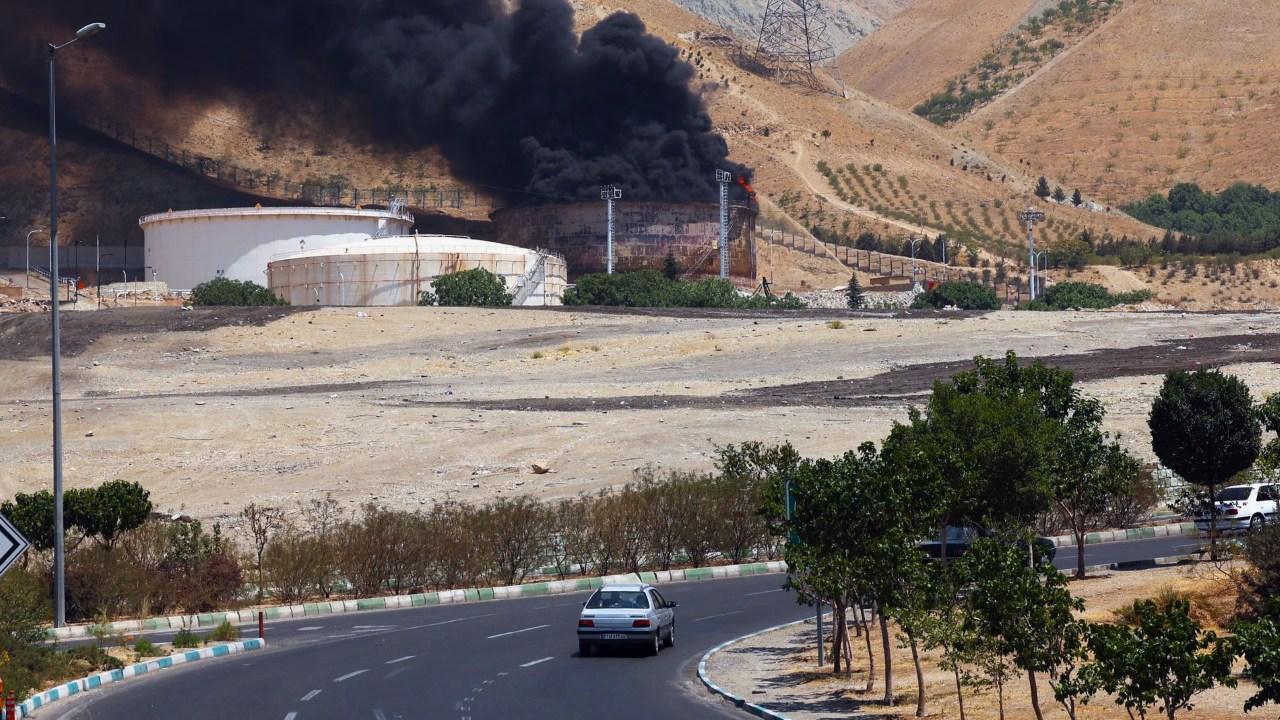
Fordow. The Road to Nowhere
23 Khordad 1404 (June 13, 2025)
It had been four hours since the strikes began. Four hours during which our world had ceased to be what it was.
The road out of Isfahan felt like fleeing a burning theater where the audience hasn’t yet realized the curtain has fallen for good, but the actors are already shoving each other at the emergency exit. The highway heading north was empty and dark, like the pupil of a blind man. Only rare oncoming cars blinded us with their headlights, snatching chunks of the desert from the darkness—gray, dusty, indifferent to our little human tragedies. The night felt like it could be rolled into a tube and smoked like a cigarette of last hope.
Father drove in silence, gripping the steering wheel as if it were the helm of a sinking ship. The Dena Plus purred, devouring kilometers of asphalt. The cabin smelled of gasoline, fear, and the mint lozenges Zeynab was nervously sucking on.
She wasn’t sleeping. She wasn’t even listening to her Korean boys. She was staring out the window, where the darkness was occasionally torn apart by distant flashes. Fireworks in honor of the end of the world.
“Where are we going?” her voice was quiet, brittle like a dry twig.
“To Mrs. Yezdi,” Mom answered without turning around. She sat in the front seat, straight as a string. “To Rustam’s mother.”
I choked on air.
“To Rustam’s mother?” I asked again. “Seriously? To the mother of the man who… who isn’t here anymore?”
“Yes,” Mom spoke evenly, as if reading a safety manual. “After the funeral, we became close. She invited us to visit many times. She said her house is always open to her son’s friends.”
I looked at the back of Father’s head. He didn’t even flinch. Perfect self-control. Or perfect sociopathy. We are going to hide in the house of a woman whose son was killed on my father’s orders (or because of his jealousy, which is the same thing), and this woman was being comforted by my mother, who was the cause of it all. Santa Barbara against the backdrop of a nuclear mushroom cloud. If God existed, He would be choking on popcorn right now.
We drove through the night, and I thought about cause-and-effect relationships. About how a butterfly flaps its wings in Gaza, and a hurricane blows the roof off in Isfahan.
If the Palestinians hadn’t started “Operation Al-Aqsa Flood”… If on that morning, October 7th, they hadn’t attacked a rave festival where stoned hippies were dancing to trance music, but instead some boring, fortified military base… Yes, they would have all died there. They would have been smeared by Merkava tanks. But they would have remained heroes. Martyrs with rifles in their hands, not butchers with GoPro cameras.
And the world would have gasped, the UN would have expressed concern, Israel would have bombed Gaza for a couple of weeks to make a point—and that would be it. Business as usual. But no. They needed a show. They needed blood on live stream. And now, two years later, that echo has rolled all the way to us. A domino effect where the last tile was my own head.
If not for those paragliders over the kibbutzim, I would be sleeping in my bed right now, dreaming of Adil. Not shaking in a car on a road to nowhere, wondering if my city would turn into radioactive glass before dawn or after.
The checkpoint emerged from the darkness suddenly, like a barrier at the border of worlds. A couple of concrete blocks, sandbags, the dim light of a searchlight in which gnats were dancing.
Father slowed down. Rolled down the window. The smell of the desert burst into the cabin—wormwood and cooling stone.
A soldier walked up to the car. Young, my age, maybe a little older. His uniform hung loosely on him, but he carried himself with the quiet confidence of a man holding a loaded machine gun, with eternity at his back.
“Good evening,” he said, peering into the cabin. “Documents, please.”
Father handed over his ID. Mom—hers, the scientific one.
The soldier shone his flashlight. The beam slid over our faces. Lingered on me. I looked him in the eye. They were dark, attentive, and surprisingly calm for a night when the sky was burning.
“Head of Municipality Security and Senior Researcher at the Nuclear Center,” he read, returning the documents. There was no servility in his voice, only mild surprise. “Unusual time for travel.”
“Operational necessity,” Father snapped briefly.
The soldier nodded, but I saw that he didn’t believe it. He saw two frightened girls in the back seat and a trunk packed with things.
“Where are you heading?” he asked, softer now. Not as a sentry, but as a person.
“To the village of Abyaneh,” Father replied.
“To relatives?”
“No,” Mom said. “To Mrs. Nilufar Yezdi.”
The soldier’s face brightened.
“Ah, Aunt Nilu. A good woman. She has the best dates in the district. And thyme tea.”
“Yes,” Mom answered quietly. “I know.”
I looked at him. His badge read: “Zahir Mashhadi, Private, Military Unit 2103.”
He was nothing like Adil. Adil was a sweet, shy intellectual who blushed when I held his hand. Adil read poetry and was afraid to look me in the eye.
This guy, Zahir, looked straight at you. He was… real. Dusty, tired, with a rifle on his shoulder, but there was a kind of primordial reliability about him. Like a rock.
I caught myself comparing them. And realizing that Adil was losing this comparison. Nineteen is a cynical age. First love seems like cotton candy, but you crave meat. Or at least someone who can shield you from shrapnel. And I hated myself for that thought. But war turns us into pragmatists. Or cynics. Or just survivors.
“Go ahead,” Zahir said, stepping back. “You’ll see the village lights right after the turn. Have a good rest.”
“We aren’t going on vacation,” Mom said suddenly. Her voice was firm. “We are leaving the children and returning to Isfahan.”
The soldier looked at her with a long, unreadable gaze.
“Inshallah,” he said. “May God protect you on your way back.”
He raised the barrier. We drove on, into the darkness. I looked back. Zahir stood in the pool of light, watching us go. A lonely figure at the edge of the world.
“He’s weird,” Zeynab whispered.
“He’s normal,” I replied. “The only normal person I’ve seen all night.”
We drove on. Into the night. To the village. To nowhere. I looked out the window and thought: “That’s it. We have become refugees. In our own country. And even Mrs. Yezdi’s dates won’t make this any sweeter.”
The lights of the village appeared. Abyaneh. Red clay, narrow streets, silence. A sanctuary. Or a trap.
The car stopped by an old house with a high fence.
“We’ve arrived,” Father said, killing the engine.
Silence fell upon us, dense and ringing. You couldn’t hear the sirens here. Here, it smelled only of dust and, faintly, of roses.
Rustam’s mother was waiting for us. The circle had closed. The murderers had brought their children to the victim’s mother so she would save them. If this isn’t a plot for a Greek tragedy, I don’t know what is. Actually, no, I do know. It’s just life in Iran.