 такое кино
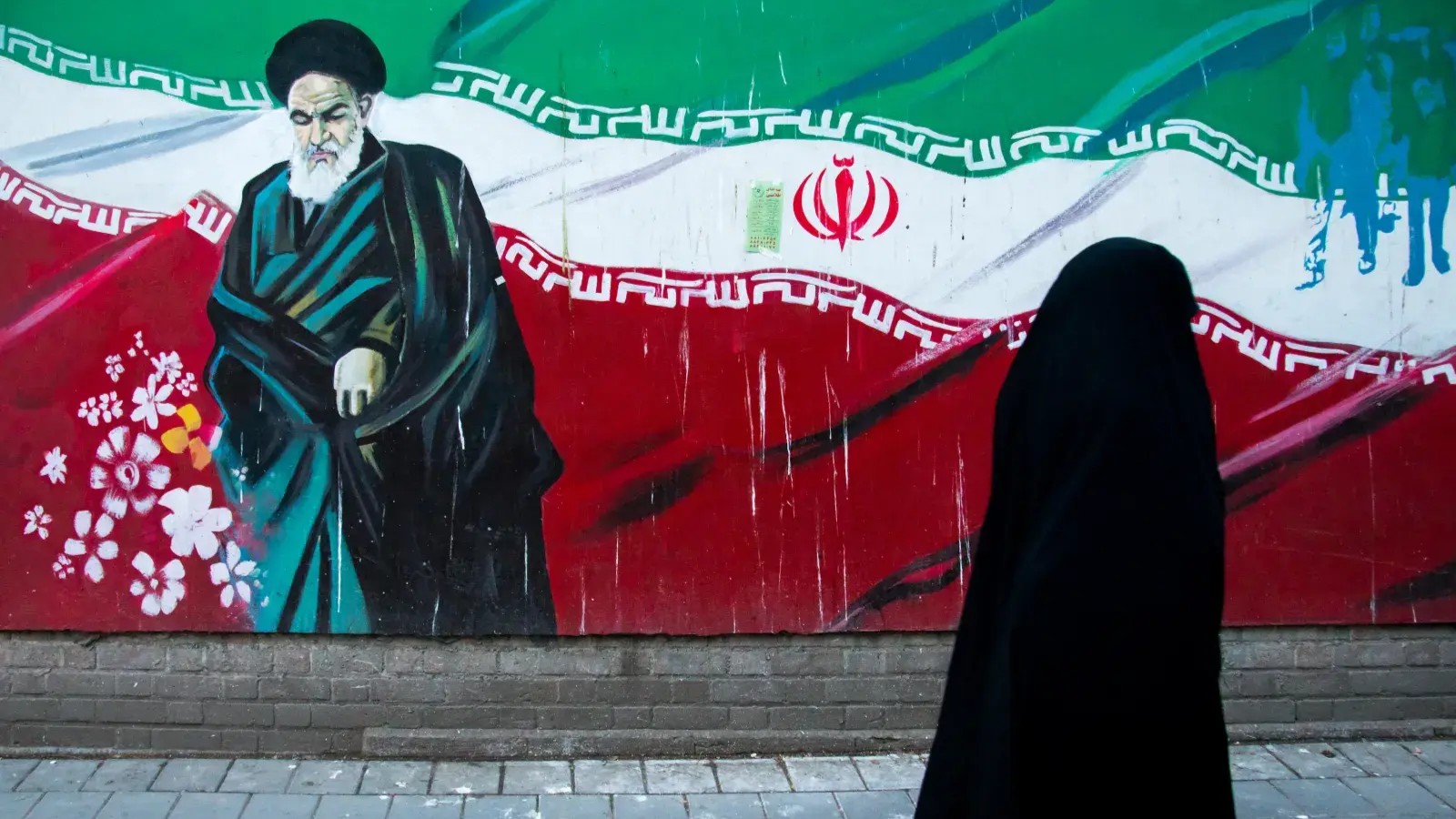
Fordow. Countercurrents
24 Khordad 1404 (June 14, 2025)
The morning passed in dial tones. They were even, impersonal, like the electrocardiogram of a stranger’s heart on an ICU monitor. “The subscriber is temporarily unavailable.” “Please leave a message after the tone.” Zahra left none. How do you fit the entire absurdity of their situation into thirty seconds of voicemail? “Hello, System. It’s me, your prodigal daughter who betrayed you but now wants to save you, because otherwise we all die. Call me back.”
Alavi was busy. This meant the country stood on the edge, and he was trying to hold it back by the hem of its jacket. And she, the daughter of a theologian and a plasma physicist, was trying to cut in line to see the man who, in her personal myth, embodied all the evil that had destroyed her family. And still, she called. Because the distance between her father’s death thirty years ago and the possible death of her children tomorrow was measured not in years, but in kilometers to the Fordow facility.
He called back in the evening. His number was restricted.
“Café ‘Simurgh’ on the outskirts,” he said without a greeting. “In an hour. And no security.”
“I have no security,” she replied.
“You have a husband,” he noted dryly and hung up.
The café looked like a temporary hangar forgotten by builders at the edge of civilization. Plastic tables, two perpetually tired palms in tubs, a kettle boiling regardless of the news on TV. People came here who didn’t care who was a friend today and who was an enemy. They just needed tea and cigarettes.
Alavi sat in the corner. He had aged. Or maybe war simply applies its own filter to faces—a sepia of hopelessness. Before him stood a cup of coffee—dark as his thoughts.
“I won’t ask why you didn’t pick up,” Zahra said, sitting opposite him. “I know the answer.”
“I am flattered you think I still decide anything,” he replied without looking up from his cup. “In our time, even generals are just operators in history’s call center. We take the calls, but we don’t write the scripts.”
“Then look at this, operator.”
She laid several sheets of paper on the table. They weren’t equations. They were maps. Contours of a mountain, wind arrows, population density figures. Red circles radiating from Point F.
“If American GBU-57s enter the game, your ‘special operation’ turns into a new Chernobyl. Only without the evacuation and without volunteers with shovels. The cloud will go here. To Qom. To Isfahan. Plutonium, strontium, cesium. A young chemist’s full set.”
Alavi looked at the maps. His face remained impenetrable, like the concrete wall of a bunker.
“Why did you decide the Americans would join the Israelis?” he asked finally. There was no skepticism in his voice, only the professional interest of a pathologist.
“Because you taught me this yourself,” she answered. “Remember how you spoke about the ‘two levels of the game’? One is televised, with State Department statements about de-escalation. The other is metapolitical. If Israel used a cascade scheme, someone has to put the final period. They have enough targets of their own. But the Americans have these bombs sitting in warehouses, waiting for their hour.”
She placed her palm on the papers, as if shielding them from his gaze.
“Before I say the main thing… I need guarantees.”
“You are in the position of a supplicant, Dr. Mousavi,” Alavi noted softly, taking out a cigarette. “Guarantees are the currency of peacetime. Now inflation has eaten everything.”
“And you are in the position of a man who can still avoid going down in history as the architect of the Iranian apocalypse,” she parried. “I need guarantees of my family’s safety. And permission for my daughters to leave the country. Study, scholarships, medical treatment—I don’t care how you frame it. The main thing is that they are not here when the rain starts.”
“Only the daughters?” he asked again, flicking his lighter.
“Yes.” She hesitated for a second, and in that hesitation was all her pain. “The girls… They are not obligated to pay for our equations. They are not variables in this problem.”
“Nasrin, I believe, has already enrolled in medical school?”
“Yes. She followed in her grandmother’s footsteps. But if she decides… if she wants to leave… let her have an open door.”
Alavi exhaled a stream of smoke at the ceiling.
“Fine,” he said at last. “I am neither Allah nor the Ministry of Foreign Affairs, but I still have old debts. If your information is worth this price—I will make the borders transparent for them. I don’t promise paradise. But I promise an exit.”
Zahra exhaled.
“Dr. Rezai. He came to us at night. Said the operation had begun. That the Americans would strike after Israel. He called things by their names. GBU-57. Concrete. Depth. And a date.”
“A date?” Alavi raised an eyebrow slightly, and ash from his cigarette fell onto the table.
“The night of June 22nd. He insisted on evacuating everything that can be ‘brought up’ before that night. Amirkhan told me his words. I…” she swallowed, “I recalculated everything myself. And the numbers add up.”
He was silent for a long time. Drinking coffee in small sips, as if measuring the time until her patience ran out. Someone laughed loudly in the café, and that laughter seemed like blasphemy.
“Do you think he is a traitor?” Zahra asked. “Dr. Rezai.”
“We don’t think, Dr. Mousavi. We record. We know we had leaks. Serious ones. After Dr. Yezdi’s death, they stopped. For a while. We thought the channel was closed. But then they resumed. That is a fact.”
“Did you think… it was me?” there was no fear in her voice, only the infinite fatigue of a person tired of justifying themselves.
“No,” Alavi said calmly. “If I thought it was you, we wouldn’t be talking here, and you wouldn’t be drinking this tea. You would be in another place where tea isn’t served. You know that well enough.”
“Then who?”
“Even if I knew,” he spread his hands, and in that gesture was something of the biblical procurator washing his hands, “I wouldn’t tell you. Don’t be offended. There are levels of secrecy where even traitors must have a private life.”
“What do you suggest?” she asked. “Besides me leaving and pretending I know nothing.”
Alavi looked at her papers, at her hands stained with ink. Hands that could have built a bomb but instead baked bread and stroked children’s heads.
“I think you need to go to Fordow,” he said. “And do what Rezai suggested. Take out everything most dangerous and most valuable. Everything that cannot be turned into dust. Save our program. Save the country from contamination.”
“With Dr. Rezai?” her voice turned icy.
“No.” He shook his head. “Not with him. If you are right, then he has been watched for a long time. And not just by us. His sudden departure to the site, his fuss—it might spook his ‘source.’ Or his handlers. We don’t need that. He must remain in plain sight. And you… you will be a shadow.”
“And what will happen to him later?” she asked.
“For now—surveillance,” Alavi answered. “If his information is confirmed… well, he deserves leniency. Even traitors sometimes do a good deed. Especially if they betray their new masters for the sake of the old ones.”
She looked at him. At the man who had been the shadow behind the mirror in the interrogation room. At the man whose people might have killed her father out of paranoia. She hadn’t come to him for forgiveness or truth. She came for visas for her daughters. But between revenge and salvation, there is always a third thing—a physical equation. If they strike Fordow, the wind rose won’t distinguish between the righteous and the sinner. Radioactive ash will cover everyone in an even layer.
“Fine,” she said, standing up. “I’ll go. But you fulfill your part of the deal.”
“Believe me, Dr. Mousavi,” Alavi replied, watching her go. “It is better to deal with living traitors than dead heroes. And I am not talking about you right now.”
Leaving, Zahra thought that if someone tried to draw the family tree of their little conspiracy, it would get tangled at the third level: a traitor informing on a traitor to save a system both tried to deceive. And the general remained sitting at the plastic table, a lonely old man trying to outplay fate while holding only marked cards.